
By Teigan Goldsmith Hitsman
Ottawa’s Jewish community has a remarkable history of military service, with one of the highest enlistment rates among Jewish communities across Canada during the Second World War. While many local Jewish men and women served in the Royal Canadian Air Force, Ottawa’s Jewish community was represented in every branch and role of the wartime effort, from the front lines to the support services that kept the military moving.
Each veteran’s experience tells a unique story of courage, sacrifice, and service, reflecting both the extraordinary contributions of Jewish Canadians and the diverse paths they took during a defining moment in history. Through these stories, we honour the individuals who served and preserve their place in the history of Ottawa’s Jewish community. While nearly 600 Jewish Ottawans served in the Canadian Armed Forces, we narrowed down the list to include one community member from each branch of the military.
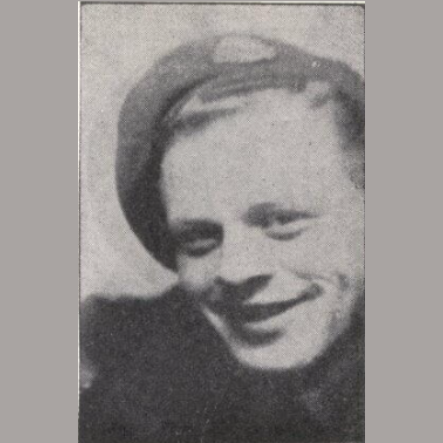
Signalman Leslie Gilbert Dover, Royal Canadian Army
Leslie Gilbert Dover was born on June 1, 1925, in Seattle, Washington. In May 1926, he and his family moved to Canada, settling in Ottawa. As a young teenager, Leslie worked as a driver and mechanic at his father’s business, Imperial Tire Sales.
On May 23, 1941, at just 16 years old, Leslie enlisted in the Canadian Army, despite being well below the minimum enlistment age of 19. He served for several months before the Army discovered his true age and was discharged on January 16, 1942 because of it. Undeterred, Leslie attempted to enlist again on March 18, 1942, and was accepted into the Army.
Following his training, Leslie served as a signalman with the Royal Canadian Corps of Signals (RCCS), the corps responsible for maintaining military communications. He trained for the role between March and May 1942 before being sent overseas to England with his unit on June 6, 1942. He remained in England until September 1944, when his unit moved to France and subsequently Belgium.
Leslie is believed to have participated in the Battle of the Scheldt, a campaign to secure access to the port of Antwerp and drive German forces from the surrounding region. On December 9, 1944, Leslie was killed in Antwerp, Belgium. He was just 19 years old. He was laid to rest at Schoonselhof Cemetery.
Leading Wren Theadora (Thea) Ginsburg, Women’s Royal Canadian Naval Service
Theadora, known as Thea, Ginsburg was born on December 23, 1923, in Ottawa, Ontario. As the Second World War progressed, she chose to serve in the Canadian Navy, completing her training in Galt, Ontario, before being posted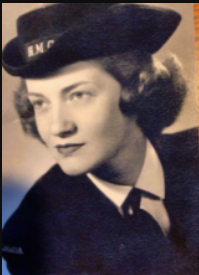 to Ottawa. There, she was assigned to LaSalle Academy, where she worked as a classifier using teletype machines. Her duties involved retrieving incoming communications, bringing the material to the decoding room, preserving the data, and assisting with the decoding process.
After several months in Ottawa, Thea was transferred to Vancouver aboard HMCS Burrard, where she continued working as a classifier. Her time on the West Coast was brief, and she was subsequently transferred to Halifax in preparation for overseas service in England.
Thea’s work in communications and codebreaking brought her to Bletchley Park, one of the Allies’ principal centres for deciphering intercepted enemy communications. She was assigned to Hut 7, a department focused on Japanese merchant shipping in the Pacific Theatre. Her responsibilities included coding and plotting information to help track Japanese shipping movements and identify patterns in their operations. Through this work, she became familiar with the islands and locations used by Japanese vessels for refuelling and resupply, including Midway, Surabaya, Kwajalein, Saipan, and the Kuril Islands.
Shortly after Victory in Europe (VE) Day in May 1945, Thea and her unit returned to Canada, where she was discharged from service where she resumed civilian life.
Alex Polowin, Royal Canadian Navy
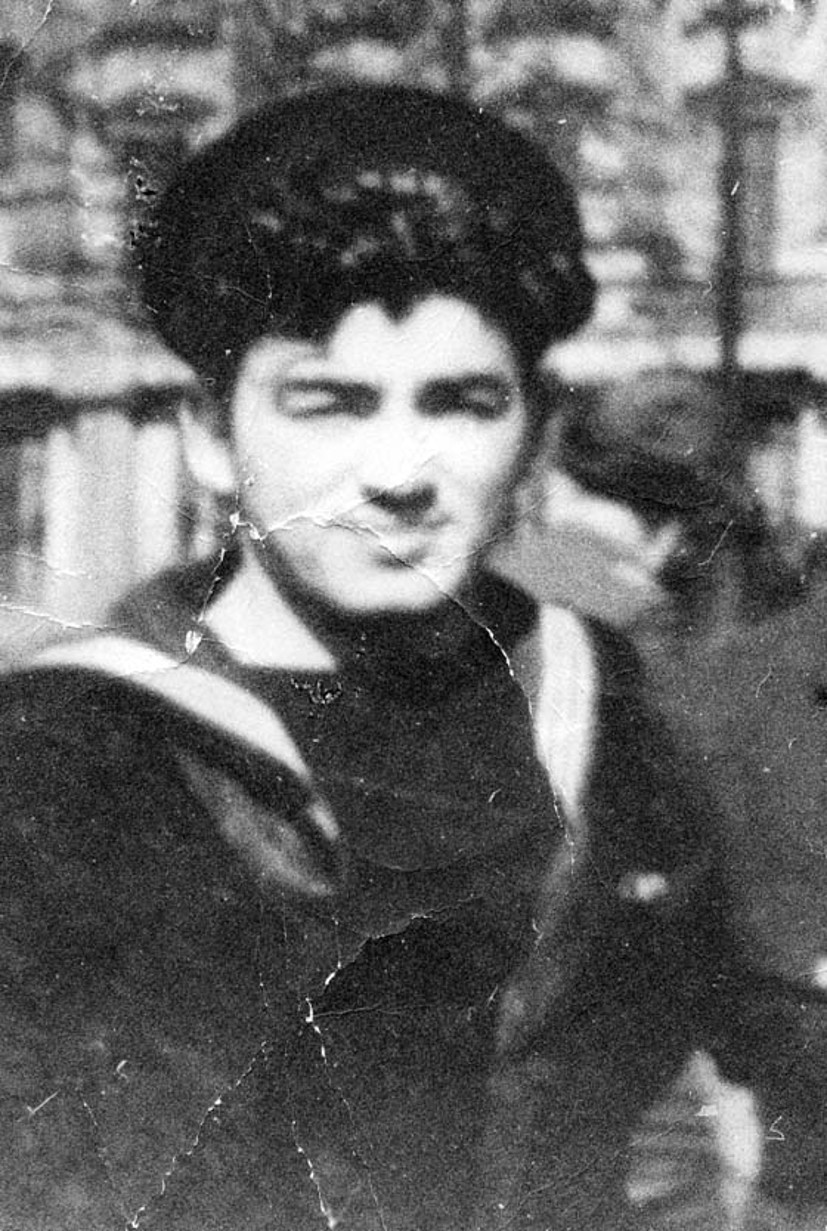 Alex Polowin was born in Lithuania on April 15, 1924. When he was three years old, he immigrated to Canada with his family. In 1941, at just 17, Alex decided to enlist in the Royal Canadian Navy. His decision was influenced in part by the experiences of relatives who had lived under German occupation in Lithuania.
Determined to serve despite his age, Alex persuaded his father, who could not read English, to sign a document stating that Alex was 18. This allowed him to enlist and begin his naval service.
Alex completed his training in Toronto and at HMCS Cornwallis in Halifax before being stationed at HMCS Avalon in St. John’s, Newfoundland. His early duties included supporting convoys carrying supplies to the Soviet Union. During Operation Overlord, the Allied invasion of Normandy in June 1944, he was assigned to the protection of landing craft.
Serving as an able-bodied seaman and gunner, Alex contributed to the naval effort aboard several vessels during the war, including HMCS Pictou, HMCS Huron, and HMCS Poundmaker.
First Lieutenant and Nursing Sister Freda Swedlove Lithwick, Canadian Army Medical Corps
Freda Swedlove was born in Stouffville, Ontario, in 1919. Following her father’s death in 1929, her mother moved the family to Kemptville. Freda attended Kemptville High School, graduating in 1936.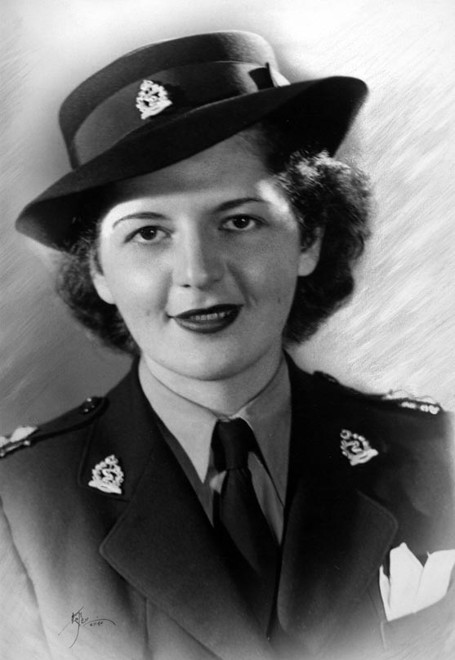
After initially enrolling in a correspondence course, Freda began exploring other career paths. She eventually decided to pursue nursing and, in 1939, chose to train in a Jewish hospital environment. She graduated from Beth Israel Hospital in Boston in 1942. Her training included a four-month placement at the Taunton State Hospital, where she spent two weeks in each division of the institution.
Freda later obtained her Public Health Certification from the University of Toronto and secured a position with the Victorian Order of Nurses (VON) in Kingston, Ontario. Beginning her professional career during wartime brought its own challenges, including learning to manage a budget and finding suitable accommodation in a busy city.
In March 1944, Freda enlisted in the Canadian Army as a nursing sister. She was subsequently posted to Rideau Military Hospital in Ottawa’s Alta Vista neighbourhood. Although she hoped to serve overseas, she remained in Ottawa because of her mother’s objections.
On June 6, 1945, just one day after her military discharge, Freda married Hyman Lithwick. She continued to build a career in healthcare after the war, eventually becoming the first Jewish woman to serve as President of the Civic Hospital Auxiliary.
Flying Officer Lawrence “Duke” Balfour Abelson, Royal Canadian Air Force
Lawrence Balfour “Duke” Abelson was born in Ottawa on June 29, 1922. At 18, he enlisted in the Royal Canadian Air Force (RCAF), beginning his training in Victoriaville, Quebec, and later continuing in Regina, Saskatchewan.
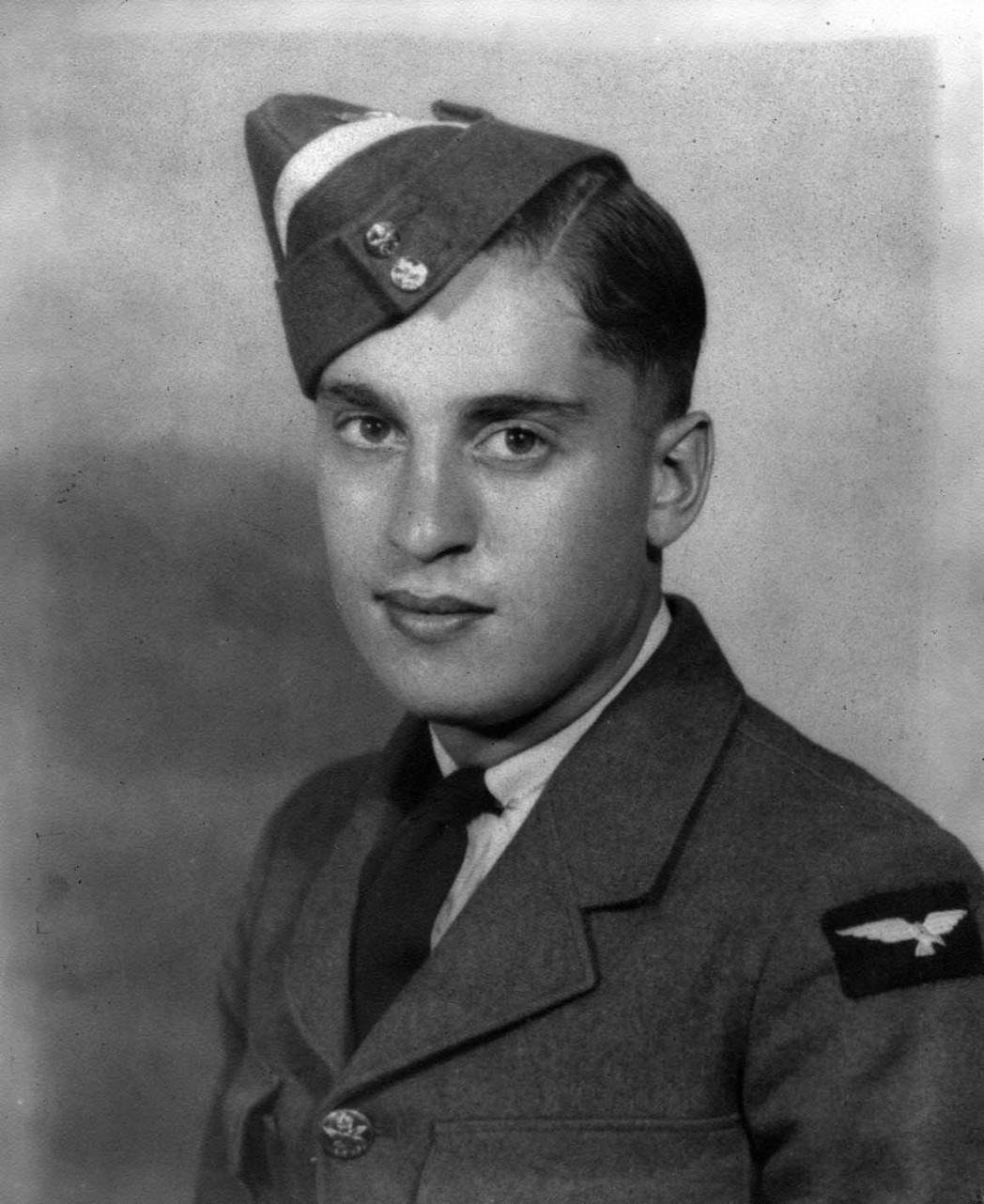 Duke initially hoped to become a pilot. His training records, however, suggest that he faced challenges in applying and retaining what he learned. Although his superiors recognized his enthusiasm, they sometimes recommended that he pursue other roles, including navigation, rather than piloting.
His early service was not without difficulty. A confidential report dated May 13, 1942, recommended that Duke be placed on six months’ probation or considered for retirement, citing concerns about his conduct and apparent lack of interest in his duties. The report also suggested that an overseas posting might help improve his attitude and service record.
Over the following months, Duke appeared to make progress. Between May 1942 and November 1943, he steadily improved his performance and developed his skills as a navigator. On September 25, 1943, he was posted to No. 418 Squadron, one of the RCAF’s most successful squadrons during the Second World War. The squadron carried out both day and night operations against enemy forces, including low-level reconnaissance and close air-support missions.
On the night of November 15, 1943, Duke was serving as navigator aboard a de Havilland Mosquito aircraft piloted by Albert Horn. The crew was participating in a searchlight practice exercise when their aircraft crashed for reasons that remain unknown. Both men were killed. Duke was just 21 years old; Albert was 26. Duke was buried alongside Albert at Chester (Blacon) Cemetery in Cheshire, England.
-- Teigan Goldsmith Hitsman is the Archivist at the Ottawa Jewish Archives.