
In moments of global crisis, identity can feel both grounding and overwhelming. For Iranian Jews, the current unrest in Iran is not a distant headline, but a deeply personal reckoning that touches history, family, faith, and belonging all at once. The emotions are layered, complex, and often difficult to articulate, especially when lived across borders and cultures.
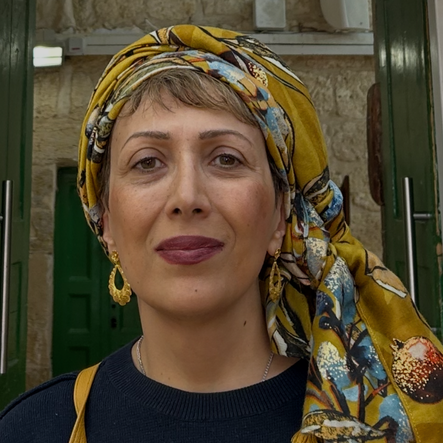
In this reflective essay, Tina Ahava Azarin shares what it means to hold multiple truths at once: to be an Iranian Jew, a proud Canadian, and a Jew currently in Israel. Through personal experience and collective memory, she explores the weight of history, the pain of watching events unfold from afar and up close, and the quiet responsibility to lead with empathy in moments of uncertainty.
By Tina Ahava Azarin
When people ask me, “how are you feeling about the current situation in Iran,” I often answer honestly: it depends on the moment. Sometimes, I respond as a Canadian Jew. Sometimes, as an Iranian Jew. And right now, very much as someone physically in Israel.
I am an Iranian Jew who has made Canada home for many years. I am deeply rooted in Canadian Jewish communal life. At this moment, I am in Israel. These three places are not separate compartments in my heart; they are intertwined. In moments like this, I feel all of them at once.
Persia is where Jewish life continued after exile, where King Cyrus the Great enabled our people to return to Jerusalem and rebuild the Second Temple. It is where the story of Purim unfolds, and where Jewish communities lived continuously for more than 2,500 years. Iranian Jews did not merely survive there; they built lives, traditions, and a culture that blended Persian warmth with Jewish faith. That history lives inside many of us.
For Iranian Jews, the pain is layered. Those who remain in Iran live carefully, aware of their vulnerability as a small minority. Those of us who live abroad often wake up wondering whether we will hear from family or friends. Distance does not protect us from worry. Sometimes, it sharpens it. I feel this deeply, alongside almost every Persian Jew I encounter in Israel, in daily life and conversation.
In Israel, the tension is immediate. Conversations are not theoretical; they centre on safety, family, resilience, and fear. Life continues, but with an edge, one that Canadian Jews often experience only through headlines and community briefings. Being here removes that distance.
At the same time, my heart remains with Iran. Watching what the Iranian people are enduring, the repression, the censorship, the punishment for dissent, is deeply painful. Iran is not a regime to me; it is culture, language, memory, and a people whose dignity has been systematically denied. That pain is often flattened in public discourse, but for those of us who come from Iran, it is personal and ongoing.
I have had quiet, emotional conversations with both Persian Jews and non-Jewish Persians. There is a shared language, shared memory, and shared grief. Many of these conversations are filled not with anger, but with empathy, a mutual understanding that the Iranian people are not their regime, and that suffering crosses all boundaries. These moments of connection remind me how deeply intertwined our histories truly are.
Living in Canada gave me freedom and security. Being in Jerusalem reminds me of Jewish resilience. Standing between these worlds, I feel compelled to speak, not as an expert, but as a daughter, a mother, and a member of this community.
I am often asked what Canadian Jews can do right now to support the Iranian people. My answer is simple:
First, listen. Ask questions. Learn our history and understand the emotional weight many Iranians are carrying. Even small gestures of curiosity and care matter. As an Iranian Jew, these moments matter deeply to me. They reaffirm that Canadian Jewish spaces can be places where complexity is held with care. Many in our community are carrying multiple truths at once: deep concern for Israel’s security, anger at extremism and terror, and compassion for civilians, Israeli and Iranian alike. For Iranian Jews, this balancing act is lived.
Second, advocate for human dignity and human rights without losing sight of the people behind the headlines. Words matter, especially when fear and anger run high. Support the Iranians you know, even those who may not voice their anxiety. It is often there, even if unspoken. A check-in or an invitation to talk can mean more than you realize.
From where I stand — rooted in Canada, present in Israel, and forever connected to Iran — I am reminded of the wisdom of our tradition. Pirke Avot teaches “who is honoured? One who honours others.” The prophets remind us “learn to do good; seek justice, rescue the oppressed, defend the orphan, plead for the widow.”
These teachings echo words written centuries ago by the great Iranian poet Saadi, whose verse is inscribed at the entrance of the United Nations:
Human beings are members of a whole,
In creation of one essence and soul.
If one member is afflicted with pain,
Other members uneasy will remain.
If you have no sympathy for human pain,
The name of human you cannot retain.
Our strength as a Canadian Jewish community is measured not only by the positions we take, but by how we honour one another in the process, by choosing empathy over indifference, moral courage over simplicity, and mutual responsibility over isolation.
In holding these truths together, we enact what the Torah calls us to do, to love our neighbour as ourselves. And it is exactly how we survive and thrive, together, across borders, across generations, and across the complexities of history.
-- Tina Ahava Azarin is an Iranian Jewish Ottawan sharing perspectives about the unrest in Iran.