
Ottawa’s City Council recently passed the Safe Access to Social Infrastructure Bylaw, also referred to as the ‘bubble’ bylaw, which has been of concern to the Jewish community. This will allow the city to create temporary safe access zones, 50 metres from building access points, around essential community spaces and services, such as synagogues, senior homes, schools, and day care centres.
These access zones will, according to the city, still allow for demonstrations to continue, but at a reasonable distance, helping to maintain clear and safe access to facilities.
The Jewish Federation of Ottawa has been involved in helping this legislation come to fruition since its inception nearly two years ago. Federation’s Director of Advocacy and Government Relations, David Sachs, has met regularly with city officials to convey the concerns of Ottawa’s Jewish community.
“As soon as Councillors Hill and Hubley introduce the idea, with the mayor’s support, we were involved in consultations with City Hall, elected officials and staff alike,” said Sachs. “We made sure all councillors had access to the key reasons such a bylaw was needed.”
Sachs emphasized that this bylaw won’t just be an important tool for the Jewish community, but all vulnerable communities in Ottawa.
“This is a human rights issue affecting many communities,” he said. “For example, we saw lots of support from the Hindu community, which expressed serious concerns about violent protests outside their houses of worship.”
Those who supported the passage of this legislation met with municipal lawyers to help drive home the viability and legality of such a bylaw.
While opponents were largely concerned about what they interpret as an infringement on their Charter right to freedom of assembly, there are other Charter rights that needed to be considered when determining its feasibility, Sachs explained.
“The argument was really about balancing [freedom of assembly] with other equally important rights, such as the right to free movement, freedom of religion, and safety,” said Sachs. “Balancing competing rights is often what governance is about.”
While the passage of this bylaw is certainly a step in the right direction, how will the day-to-day lives of Jewish Ottawans and those from other marginalized communities be affected?
The answer is all about enforcement, said Sachs. “If the police and bylaw services follow this legislation as intended, it means protests like the one we saw in 2024 on the Jewish community campus will no longer be allowed.”
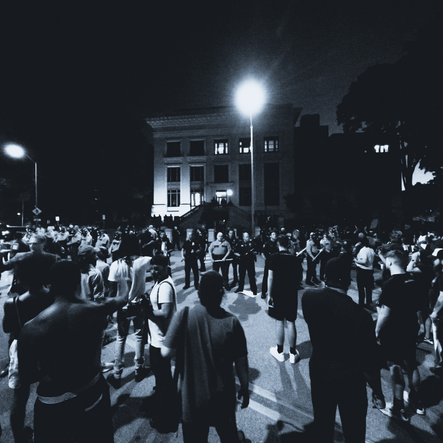
Sachs is referring to a protest that took place in the Fall 2024 where dozens of protesters, many masked, gathered at the Jewish Community Campus beside the Bess and Moe Greenberg Family Hillel Lodge. The protest forced the early closure of the day care and trapped many people inside the campus for several hours. The protest also lasted into the night, and residents of the Lodge were kept awake by the chanting, which included violent rhetoric.
This bylaw creates a protest-free ‘bubble’ around access points to vulnerable sites. This will include places of worship, schools, daycares, healthcare facilities, and long-term care facilities like Hillel Lodge. Sites that wish to be protected by this legislation must submit an application to the city to be considered.
“Because of this bylaw, we will be able to come and go safely and without fear of hate being in our faces,” Sachs said. “Additionally, there will also be much stricter parameters around noise, so the kind of screaming and noise amplification we have seen will also be prohibited.”
As concerns about Jewish community safety have grown in the last few years, the passage of this bylaw signals that the city is willing to work in partnership with organizations like Federation to ensure that all vulnerable populations can worship, learn, and live in peace.
To learn more about this bylaw and what it entails, click here.