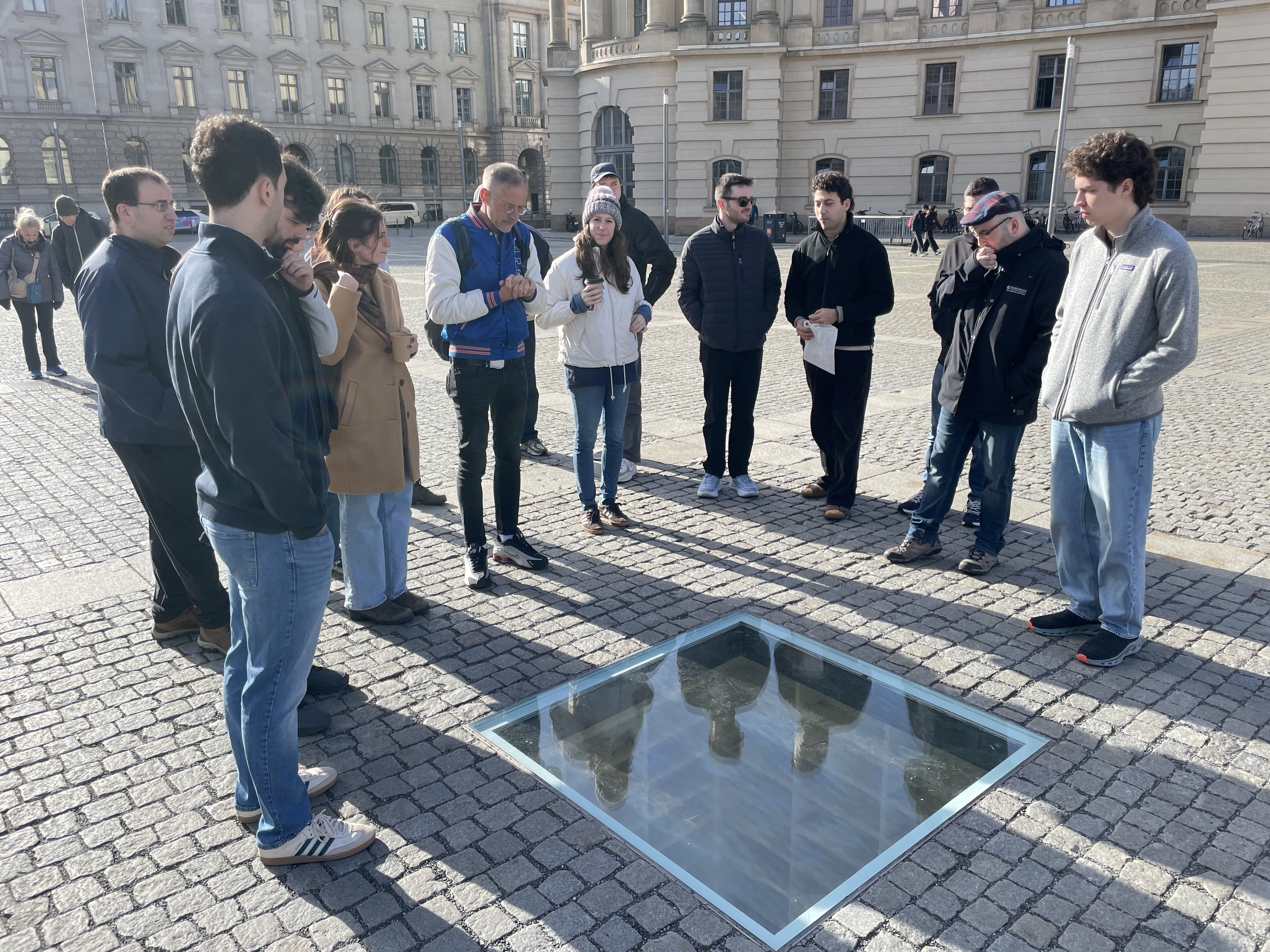
The history of the Holocaust was brought to life for 12 Ottawa students and young adults as they embarked on a trip to Germany earlier this month as part of the Germany Close Up program.
Spending a week in Berlin, with day trips to Erfurt and the Sachsenhausen concentration camp, the experience was organized by the German Academic Exchange Service (Deutscher Akademischer Austauschdienst; DAAD) in partnership with the German Embassy in Canada, the Centre for Holocaust Education and Scholarship (CHES), and Hillel Ottawa.
The DAAD has a mission to bring 200 North American Jewish students and young adults to Germany to experience the country’s history, particularly as it pertains to Holocaust remembrance. This year’s trip was the first time an entirely Canadian delegation went.
Leading this year’s contingent was Jamie Sweigman, Director of Hillel Ottawa. Having never travelled to Germany previously, he said the trip was an eye-opening experience.
“We had a very busy schedule,” he said. “We had something every morning and afternoon unless we were travelling outside of Berlin.”
Sweigman recounted meeting with local politicians, visiting synagogues, touring the city, and having a Shabbat dinner with the local Jewish community.
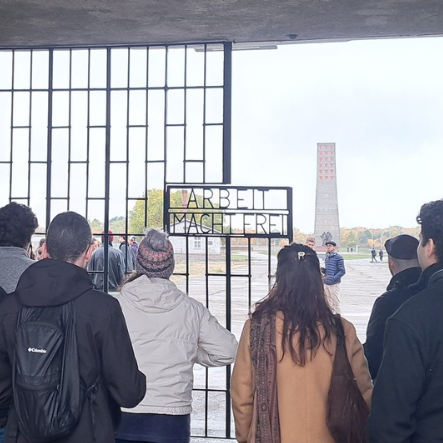
One of the most meaningful points for Sweigman was visiting the Sachsenhausen concentration camp.
“It was my first time in a concentration camp,” he said. “I have grandparents that were in concentration camps in Poland, so it was very intense.”
Sweigman noted that while Sachsenhausen was a “labour camp” rather than an extermination camp like Auschwitz or Dachau, the dark history of the site was still palpable as the group walked through the gates with the words Arbeit macht frei, work makes you free.
“When we were there, I noticed that there were a barracks for sleeping and a food hall, and nothing else,” Sweigman said. “There was nothing to do with your time there other than to line up, get counted, and get to work.”
One of the participants in the group, Aidan Kaplan, spoke of the feeling of bewilderment he felt while touring the camp.
“It was difficult for me to connect to the enormous tragedy that occurred on the grounds we were walking because of how big it was,” he explained. “It was strange to see a place that was designed for such horror to now be used as a memorial and museum, somewhat detached from what had happened.”
Kaplan explained that learning about the people that were held there and seeing pictures of what it was like during the height of the Second World War helped him to connect more deeply with the experience.
For another participant, Dana Strauss, the experience of exploring Germany's Jewish history also prompted reflection on the complexities of Jewish life in the country today.
Strauss described an accumulation of small, uncomfortable moments throughout the trip that left her with a sense of unease. Recalling Dara Horn's book People Love Dead Jews, she said its central warning became particularly apparent in Berlin, where she noticed a contrast between the commemoration of Jewish history and the realities facing the country's contemporary Jewish community.
During a walking tour of Erfurt's historic Jewish Quarter, Strauss was struck by the tour guide's repeated references to an upcoming discussion of the pogrom, while a tour of Jewish Berlin raised questions about how the city's Jewish past was being presented alongside its relatively small Jewish present.
The group also heard from members of Germany's Jewish community about their experiences with antisemitism and discrimination. Strauss recalled hearing from local Jewish residents Jonathan Reti and Shlomit Tripp, who spoke about antisemitic bullying and antizionist discrimination, respectively. These conversations offered a sobering perspective on the challenges facing Jews living in Germany today.
“The juxtaposition of the fear and hostility experienced by the last bastions of German Jewry next to the fetishization of Jews may have been the strangest part,” said Strauss.
For Strauss, these experiences highlighted a striking disconnect between the country's efforts to remember Jewish history and the lived experiences of Jewish people in contemporary Germany.
Germany Close Up provided a unique glimpse into how the country remembers the Holocaust and the resilience of the German Jewish community, both historically and in the present day. Another trip is in the works in two years’ time, so more young adults will have the opportunity to experience German and Jewish history first-hand.
To learn more about the Germany Close Up experience, click here.